
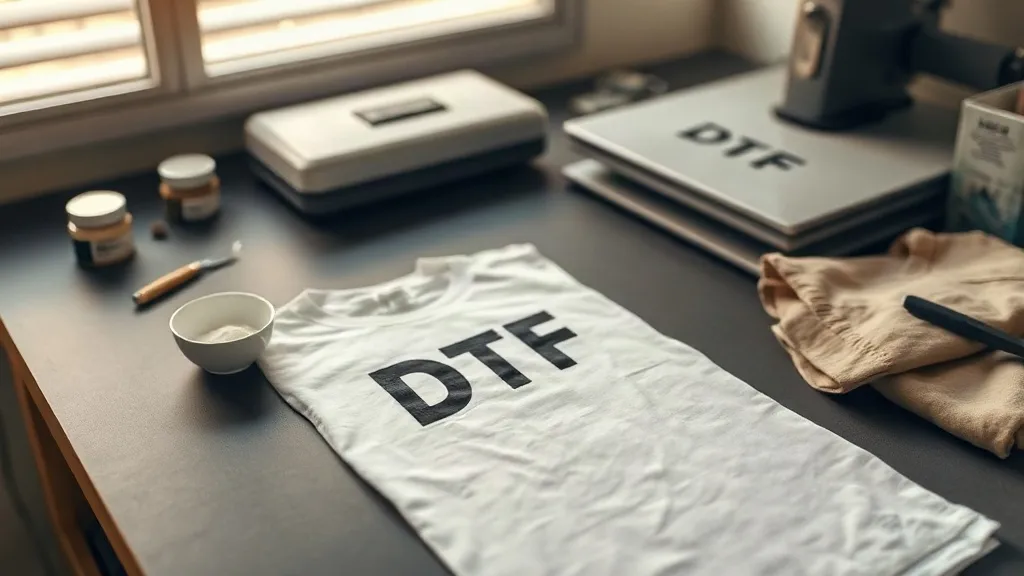
Most people meet dtf transfers for the first time through a single gang sheet ordered online, and that first encounter usually goes one of two ways. Either the print comes out crisp, stretches with the shirt, and survives twenty washes, or it cracks across the chest after the third wear and the customer sends a photo you would rather not see. The difference between those two outcomes rarely comes down to the artwork. It comes down to a handful of variables that nobody explains when you buy your first roll of film.
This guide is written for the person running a two-color press in a garage, the side business doing twenty shirts a week, and the shop that just added dtf as a backup method for small orders that do not justify screen setup. It covers what the process actually is, where it beats other decoration methods, and the specific habits that separate a durable transfer from a return request.
What DTF Actually Does Differently
Direct to film printing separates the ink from the garment entirely. A printer lays down CMYK plus white onto a coated PET film, the wet print gets dusted with a hot-melt adhesive powder, and that powder is cured until it turns into a flexible glue layer. What you end up holding is a plastisol-like skin sitting on plastic film, waiting for heat and pressure to bond it to fabric.
That extra step is the whole point. Because the adhesive is doing the bonding rather than the ink itself, DTF can go onto cotton, polyester, blends, canvas, nylon, and even some treated leathers without a pretreat step. Screen printing needs the right mesh and ink system for each substrate. Vinyl needs cutting and weeding. Sublimation needs a polyester surface and a light garment. DTF does not care much, which is why it has become the default for short runs on mixed blanks.
It also solves a storage problem. A printed transfer can sit in a drawer for months and still press correctly, as long as it stays dry and out of direct heat. You can print a hundred designs on Monday, press forty on Wednesday, and ship the rest next month. That flexibility is worth real money to a shop that does not want to hold inventory of finished shirts in six sizes.
The Three Materials That Decide Your Quality
Film
Not all PET film is coated the same way. Cold-peel film and hot-peel film behave differently at the press, and mixing them up mid-job is one of the most common causes of a transfer that will not release cleanly. Cold peel means you wait until the transfer is fully cool before pulling the carrier sheet. Hot peel means you remove it within seconds while the garment is still warm. If you peel a cold-peel transfer too early, the adhesive stretches and the edges smear.
Film thickness matters too. Thinner film holds finer detail and feels less like a patch on the shirt, but it is less forgiving of uneven pressure. Thicker film is easier to work with on textured fabrics and heavy seams. Most shops keep one matte film for dark garments and one for light, and they stop experimenting once they find a supplier whose coating is consistent batch to batch.
Powder
The adhesive powder is where cheap transfers fail. Fine powder gives a smoother hand and better detail retention, but it can be fussy about humidity. Coarse powder bonds aggressively and handles stretchy fabrics well, but it leaves a slightly grainier feel. A shaker application that looks even to the eye can still be uneven in density, and uneven powder means uneven bonding, which means the transfer lifts at the corners first.
Store powder in a sealed container. A humid summer week will turn an open bag into a clumpy mess, and clumps do not melt evenly. If you are ordering dtf transfers near me and the price looks unusually low, powder quality is one of the first places a supplier cuts corners.
Ink and White Layer
The white layer is the foundation of the whole print. On dark shirts, a thin white layer lets the garment color bleed through and the design looks muddy. Too much white and the transfer feels stiff and heavy on the chest. Good DTF output has a white layer that is opaque but not bulky, and that balance is a function of ink viscosity, print head condition, and the profile the operator is running.
Press Settings That Actually Work
Every film supplier publishes a recommended temperature, time, and pressure. Those numbers are a starting point, not a guarantee, because your press, your platen cover, and your garment thickness all shift the result. A few practical rules hold up across most setups:
- Pre-press the garment for a few seconds to remove moisture. Cotton holds ambient humidity, and trapped moisture turns to steam under the transfer, which is a reliable way to get bubbles and poor adhesion.
- Use medium to firm pressure. Light pressure leaves the adhesive sitting on top of the fabric weave instead of penetrating it.
- Press at the lower end of the temperature range first. Too hot and the film can wrinkle or the adhesive can scorch before it bonds.
- Peel according to the film type, not according to habit. Cold peel means cold.
- Do a second press with a cover sheet or parchment for a few seconds after peeling. This settles the adhesive into the weave and improves wash durability noticeably.
If you change garment brands, re-test. A heavyweight ring-spun cotton and a lightweight tri-blend behave very differently under the same platen, and the tri-blend will show press marks if you push temperature too high.
Where DTF Wins and Where It Does Not
DTF is excellent for small orders, mixed garments, and designs with lots of color or fine gradients. It is also the cheapest way to produce a one-off sample without burning screens. For a shop doing team jerseys, event shirts, or personalized names on the back of a hoodie, the economics are hard to beat.
It is less ideal for very large runs where screen printing will always win on per-unit cost, and it is not the right choice for garments that will be worn against sensitive skin in high-friction areas, since the adhesive layer does add a slight texture. On performance polyester, DTF works, but the hand feel is different from sublimation and some customers notice. Be honest about that before you take the order.
Pricing So the Job Makes Money
The trap with dtf transfers is treating them as free because the printer is already running. Film, powder, ink, labor for weeding and trimming, and the press time all add up. A realistic approach is to calculate cost per square inch of printed transfer, add your press time at an hourly rate, and then add garment cost and margin. Shops that skip the press time calculation end up wondering why busy weeks do not translate into profit.
Trimming matters here too. Trimming transfers close to the design edge saves film and reduces the visible border on the finished shirt. If you are printing a gang sheet with multiple designs, plan the layout so the cuts are clean and you are not wasting half an inch around every logo.
Common Failures and What They Mean
Cracking after washing almost always points to under-cured powder or insufficient pressure. Lifting edges usually mean the garment was not pre-pressed or the peel was done at the wrong temperature. A cloudy or dull finish on dark shirts suggests a thin white layer or a print head that needs attention. Stiff, plastic-feeling transfers come from too much powder or too much white ink.
Keep a small notebook or a spreadsheet of settings per garment type. After a few months you will have a reference that is worth more than any generic guide, because it reflects your press, your climate, and your supplier.
Frequently Asked Questions
How long do DTF transfers last on a shirt?
With correct pressing and normal washing inside out in cold water, most quality transfers hold up for dozens of washes. Longevity depends far more on powder cure and pressure than on the ink itself.
Can I press DTF onto 100% polyester?
Yes, and it bonds well. Use a slightly lower temperature and be careful with heat-sensitive polyester, which can glaze if you press too hot. Test on a scrap first.
Do I need a special press for DTF?
A standard heat press with adjustable temperature and pressure works fine. What matters is even pressure across the platen, so a worn platen cover or a warped upper plate will cause problems no matter what settings you use.
How should I store unused transfers?
Keep them flat, dry, and away from heat and direct sunlight. A sealed bag or a drawer at room temperature is enough. Avoid stacking heavy items on top, since creases in the film can transfer into the print.
Is DTF cheaper than screen printing?
For small runs and multi-color designs, usually yes. For large runs of a single design, screen printing becomes cheaper per unit once setup costs are spread across enough pieces.