
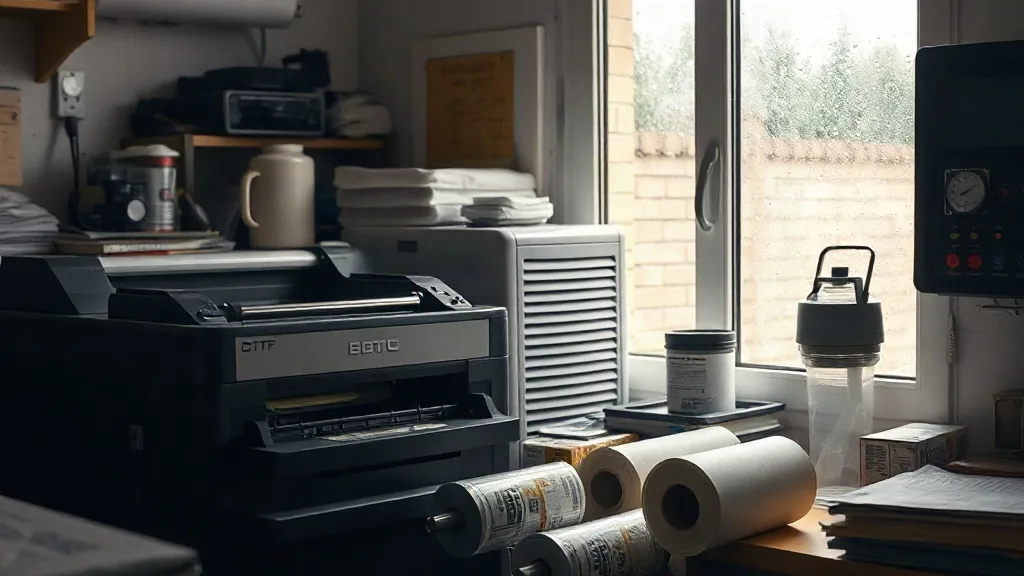
If you have ever opened a fresh roll of DTF film only to find it wavy and refusing to lay flat, or watched your adhesive powder turn into a clumpy mess before it even hit the shaker, you have met humidity. It is the invisible variable that quietly undermines dtf transfers quality, and it rarely announces itself. Unlike a dirty printhead or a worn press pad, moisture in the air does not trigger an error message. It just makes everything slightly worse: colors duller, adhesion weaker, and wash durability shorter. Understanding how humidity interacts with every component of the DTF process is the first step to controlling it.
How Moisture Sneaks Into the DTF Workflow
DTF printing relies on a delicate balance of materials that all react to water vapor. The film has a coating that must remain dry to accept ink properly. The adhesive powder is hygroscopic, meaning it absorbs moisture from the air. The ink itself is water-based, but once printed, it needs to release that water evenly during curing. When ambient humidity climbs above 60 percent, each of these materials starts to misbehave in ways that are easy to overlook until you inspect the final product.
In a typical small shop, humidity fluctuates with the weather, the HVAC system, and even the number of people in the room. A rainy week can push relative humidity from 40 percent to 75 percent overnight. Printers who do not monitor this are essentially gambling with every job. The symptoms show up later: a transfer that looked perfect on press might crack after the first wash, or a design that seemed vibrant on film might look washed out on the shirt.
The Science of Moisture and DTF Materials
Film: When It Wrinkles and Curls
DTF film is coated with a release layer that holds the printed ink and powder. That coating is sensitive to moisture. When film absorbs water vapor, it expands unevenly, causing the sheet to curl at the edges or develop a wavy texture. Curled film does not sit flush against the printer platen, which leads to inconsistent ink laydown and even head strikes. In extreme cases, the film can warp enough that the printer misreads its position, ruining the job before it starts.
Storing film in a humid room is a common mistake. Even sealed rolls can draw moisture once the packaging is opened. A shop that leaves a roll on the printer for days in a damp environment is asking for trouble.
Powder: The Clumping Problem
Adhesive powder is designed to melt and bond with the ink under heat. But if it absorbs moisture, it clumps into small balls that do not melt evenly. These clumps create uneven adhesive distribution, leading to patches where the transfer fails to stick. You might notice that some areas of the print peel away after washing while others hold firm. That inconsistency is often a humidity issue, not a press issue.
Powder that has been exposed to humid air also tends to cake inside the shaker, making it difficult to apply a thin, even layer. Over-application becomes a temptation, which then leads to a stiff, plastic-like feel on the garment.
Ink: Drying and Curing Interrupted
Water-based DTF ink needs to dry evenly after printing. In high humidity, the water evaporates more slowly, and the ink may not fully set before powder application. This can cause the powder to sink into the ink rather than sit on top, reducing its effectiveness. During curing, residual moisture in the ink can turn to steam, creating tiny bubbles or pinholes in the transfer. These defects are often invisible until after pressing, when they show up as weak spots that crack or peel.
Signs That Humidity Is Sabotaging Your Prints
Not every problem is caused by humidity, but certain patterns point directly to moisture. Here are the most common red flags:
- Film that curls at the edges or feels soft and limp instead of crisp.
- Powder that clumps in the shaker or forms uneven patches on the film.
- Prints that look grainy or have tiny bubbles after curing.
- Transfers that peel or crack after washing, especially in irregular patterns.
- Colors that appear muted or washed out compared to your usual output.
If you notice two or more of these simultaneously, check your humidity levels before you start tweaking press settings. You might be solving the wrong problem.
Measuring and Managing Humidity in the Shop
The first step is awareness. A simple digital hygrometer costs less than a roll of film and gives you real-time readings. Place it near your printer and powder station. Aim to keep relative humidity between 40 and 60 percent. Below 40 percent, static electricity can become an issue, causing powder to cling to the film in unwanted places. Above 60 percent, moisture becomes the enemy.
In humid climates, a dehumidifier is not a luxury; it is a necessity. Choose one sized for your room and run it continuously during wet months. In dry climates, a humidifier might be needed to prevent static, but that is a separate discussion. The key is to maintain stability. Rapid swings in humidity are just as damaging as consistently high levels because materials expand and contract, leading to inconsistent results.
Storage That Protects Your Materials
Proper storage is your first line of defense. Film should be kept in its original packaging, resealed after each use, and stored in a dry cabinet or airtight container. Silica gel packets can help absorb residual moisture. Powder should be kept in a sealed container and only dispensed into the shaker as needed. Avoid leaving powder in the shaker overnight in a humid room; it will absorb moisture and clump by morning.
If you buy dtf transfers near me from a local supplier, ask about their storage practices. A supplier who does not control humidity may deliver film that is already compromised. For those who order online, inspect the packaging upon arrival and let the materials acclimate to your shop environment before opening.
Adjusting Your Workflow for Humid Conditions
Even with a dehumidifier, you may need to tweak your process during humid spells. Here are practical adjustments:
- Pre-dry film: If film feels soft or curls, place it in a warm, dry area (not directly on a heat source) for a few hours before printing. A dedicated drying cabinet works well.
- Reduce powder application: Humid powder clumps, so use a finer mesh shaker or apply in thinner layers to avoid overcompensating.
- Extend curing time: Moisture in the ink needs to escape, so increase curing time slightly or reduce belt speed to ensure complete drying.
- Press with care: Humid transfers may need a slightly longer press time to fully activate the adhesive, but avoid raising temperature too much, which can scorch the film.
- Monitor wash tests: Run a wash test on every batch during humid periods to catch adhesion issues early.
These adjustments are not permanent; they are temporary measures until humidity returns to normal. Document what works so you can repeat it next season.
Long-Term Solutions: Climate Control and Equipment
For shops in consistently humid regions, investing in proper climate control is the only sustainable fix. A ductless mini-split system or a dedicated dehumidifier with a humidistat can maintain stable conditions. Some printers also offer enclosed environments or dry cabinets for film storage. If you are scaling up, consider a separate room for printing and powder application with its own climate control. This separation also reduces airborne powder, which is another humidity-related nuisance.
Another long-term solution is to choose materials that are more forgiving. Some film brands have better moisture resistance, and certain powders are treated to resist clumping. Testing different suppliers can reveal which ones hold up better in your environment. But no material is immune to extreme humidity, so climate control remains the foundation.
Frequently Asked Questions
Can I just dry my powder in the oven if it gets clumpy?
It is not recommended. Heating powder can alter its chemical properties and create safety hazards. Instead, discard clumpy powder and store new powder in an airtight container with silica gel. Prevention is easier than rescue.
My shop is in a humid climate. Do I need a dehumidifier or can I use AC?
Air conditioning removes some moisture, but it may not be enough to keep humidity below 60 percent consistently. A dedicated dehumidifier with a humidistat is more reliable for maintaining stable levels, especially during rainy seasons.
Why do my prints look fine on press but crack after washing?
This is often a sign of moisture during the curing or powder stage. If the powder absorbed moisture, it may not have bonded fully, leading to weak spots that fail in the wash. Check humidity levels and ensure powder is stored dry.
Does humidity affect all DTF films equally?
No, film coatings vary by manufacturer. Some are more moisture-resistant than others. If humidity is a persistent issue, test different brands to find one that performs better in your conditions.
Can I use a regular room humidifier to reduce static in dry weather?
Yes, but monitor closely. You want to raise humidity to around 40-50 percent, not higher. Over-humidifying can cause the same problems as a humid climate. Use a hygrometer to stay in the safe range.
Humidity is not the most glamorous topic in DTF printing, but ignoring it is costly. By understanding how moisture affects film, powder, and ink, and by taking simple steps to control your environment, you can turn a silent saboteur into a manageable variable. Your prints will be more consistent, your wash durability will improve, and you will spend less time troubleshooting mysterious defects.